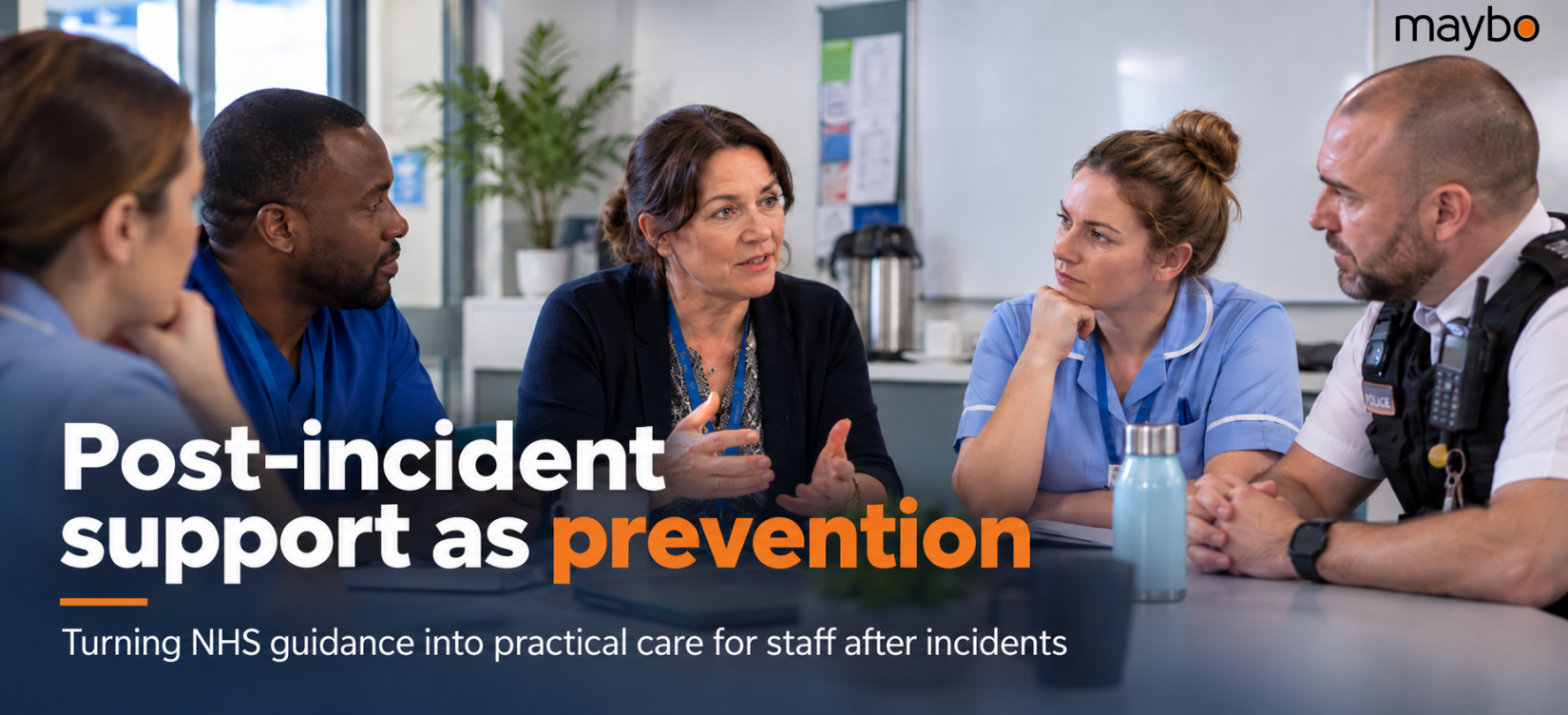

Healthcare security teams work at the intersection of safety, care, and complex human needs. They may respond to hostility in a busy Emergency Department, support a colleague during a mental health crisis, or help protect patients and staff when an incident escalates. Their role demands sound judgement, communication, and an understanding of the clinical environment, not simply the ability to intervene physically.
New research commissioned by the National Association for Healthcare Security (NAHS) brings these challenges into focus. The 2026 report, produced by Perpetuity Research & Consultancy International, draws on 122 survey responses and 10 interviews with healthcare security professionals and others in related roles. It highlights persistent concerns about governance, training, professional recognition, and the relationship between security and clinical teams.
The research at a glance
92%
support healthcare-specific security training for all security personnel
90%
support a joint clinical and security approach when restraint is required
63%
report a lack of shared understanding between clinical and security staff about restraint limitations
81%
say violence, aggression or abuse by patients occurs daily in their organisation
Based on 122 survey responses and 10 interviews (report pp. 42–46 and 66). Figures describe the views and reported experience of respondents, not national prevalence.
Our perspective
- Healthcare security requires specialist skills that reflect the realities of patient care.
- Prevention, active listening, and de-escalation should come before restrictive intervention.
- Clinical and security teams need shared expectations, roles, and a coordinated response.
- Training is more effective when supported by policies, leadership, supervision, and assurance.
- Patient dignity and staff safety must be considered together.
A specialist role needs specialist preparation
In the study, 92% of survey respondents supported healthcare-specific security training for all security personnel. Respondents also identified clinical awareness, communication skills, de-escalation, relevant legislation, and consistent practice as priorities (report pp. 66 and 72–75).
That finding reflects the distinct challenge of healthcare environments. Behaviour that appears confrontational may be connected to distress, fear, pain, confusion, or an unmet need. Responding safely means recognising these possible influences without making assumptions about an individual. It also means knowing when to seek clinical advice and when a situation is outside a security officer's remit.
Shared understanding is as important as individual skill
One of the report's more concerning findings is that 63% of respondents identified a lack of shared understanding between clinical and security staff about the procedural limitations governing restraint or control techniques (pp. 42–44). Meanwhile, 90% supported a joint approach when restraint is required (p. 66).
This should prompt a practical question for healthcare leaders:
When an incident occurs, do all colleagues understand who is making clinical decisions, who is coordinating support, what each person is trained and authorised to do, and how patient wellbeing will be monitored?
Policies may describe these responsibilities, but they need to be understood and rehearsed. Joint, scenario-based learning can help teams identify gaps in communication and agree safer ways of working together before a high-pressure incident.
De-escalation is a capability, not just a course topic
The research repeatedly highlights early recognition of escalation, active listening, empathy, and verbal de-escalation (pp. 73–75). These are not optional extras that sit alongside physical intervention. They are core capabilities that can help prevent situations from becoming more restrictive or harmful.
For Maybo, a prevention-led approach begins with understanding what may be contributing to behaviour, adapting communication, maintaining professional boundaries, and making proportionate decisions based on a changing assessment of risk. Where physical intervention becomes necessary, it must be lawful, necessary, proportionate, and consistent with applicable clinical governance and training.
From training attendance to organisational assurance
The report also draws attention to the broader system in which security operates. Respondents describe inconsistent expectations across departments, gaps in oversight, and uncertainty about the status of healthcare security within organisations. These challenges cannot be resolved by a course in isolation.
Healthcare leaders can use the findings to review how training connects with local procedures, multidisciplinary responsibilities, competency assessment, refresher learning, incident reporting, and reflective review. An effective approach supports staff to use their skills consistently and gives leaders evidence of how those skills are embedded in practice.
Three questions for healthcare leaders
Do our clinical and security teams have a genuinely shared understanding of their roles during escalating incidents?
Does our training place sufficient emphasis on prevention, communication, clinical awareness, and the reduction of restrictive practice?
Can we demonstrate that training is refreshed, supported, and connected to policy, governance, and learning from incidents?
Safer care is a shared responsibility
The NAHS research makes a compelling case for treating healthcare security as a specialist, collaborative function that enables patient care. Security colleagues need the right preparation, but they also need clear direction, effective partnerships, and a culture in which safety and dignity are considered together.
At Maybo, we support organisations to develop the knowledge, confidence, and practical skills needed to prevent conflict, respond to escalating situations, and reduce avoidable restrictive interventions. The next step is not necessarily to add more training. It is to establish whether existing learning, responsibilities, and operational practice work together to support safer outcomes for everyone.
Reviewing healthcare security training, or how clinical and security colleagues work together? Speak to Maybo about a training needs discussion informed by your setting, risks and existing procedures.
Speak to MayboSource
Howell, C., Gill, M., and Goldstraw-White, J. (2026). The role of healthcare security: addressing key challenges. Perpetuity Research & Consultancy International, commissioned by the National Association for Healthcare Security (NAHS).
All percentages refer to respondents in that study, not national prevalence estimates.