Choose another country or region to
see content specific to your location
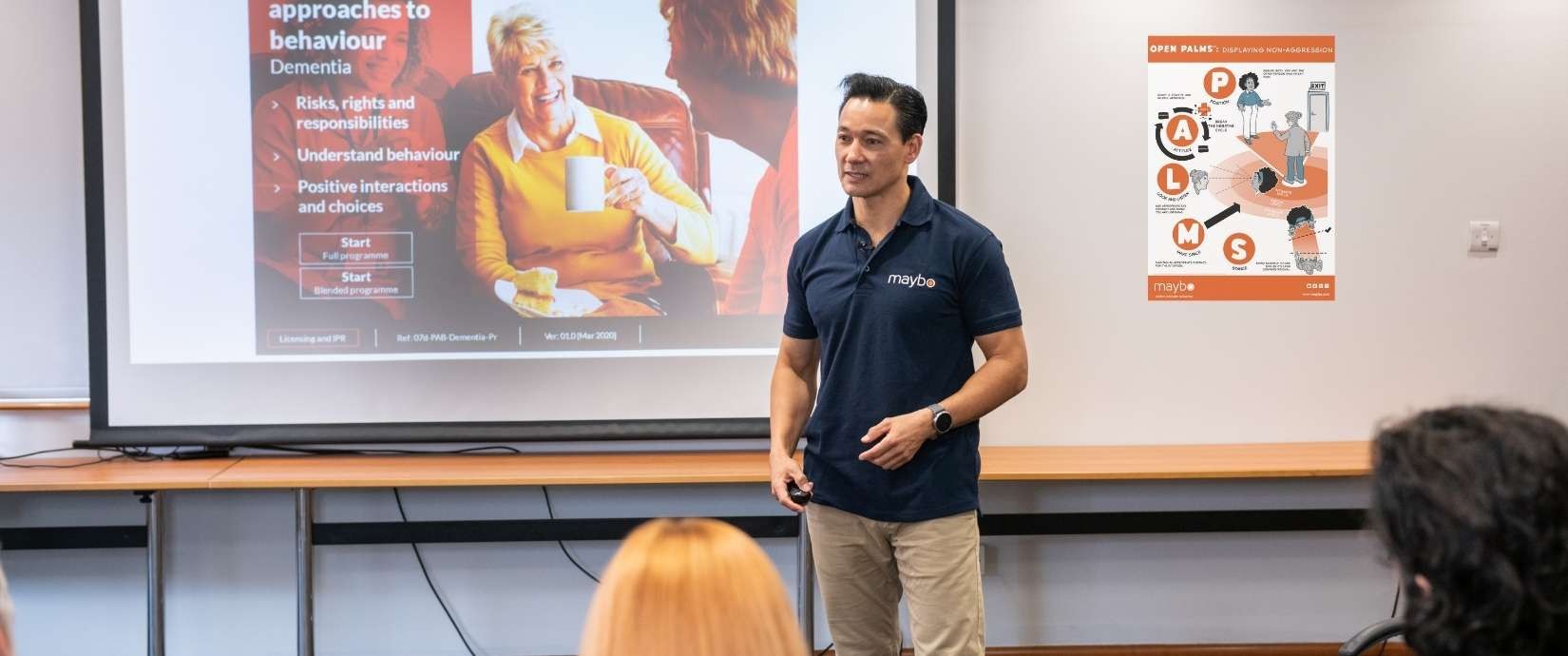
How a national care provider worked with Maybo to strengthen staff confidence, reduce restrictive practices and improve outcomes for people living with dementia.
A national social care provider approached Maybo following an increase in incidents within services supporting older adults and people living with dementia. Staff felt under-equipped to respond safely and positively to behaviours associated with stress and distress, and some incidents had resulted in the police being called for support.
The provider wanted to strengthen staff confidence, improve the support available to its services and reduce reliance on restrictive interventions. Maybo worked in partnership with the organisation to develop a gradual, risk-led approach that could be implemented consistently across a large and diverse group of services.
We began by visiting the service experiencing the highest level of serious incidents. A Maybo specialist reviewed recent incidents, support plans, staff feedback and the physical environment before agreeing a tailored programme with the provider.
A pilot programme was delivered to 18 staff in one of the services that experienced the highest number of behavioural incidents, took the learning and further refined the approach. We then worked with the provider to develop a two-year action plan that included:
• Prioritising the services experiencing the most serious incidents
• Assessing risks and developing personal safety plans
• Supporting Dementia Care Managers to strengthen Behaviour Support Plans
• Introducing in-house delivery through Maybo’s Train-the-Trainer pathway
• Establishing a consistent training needs analysis and programme review process
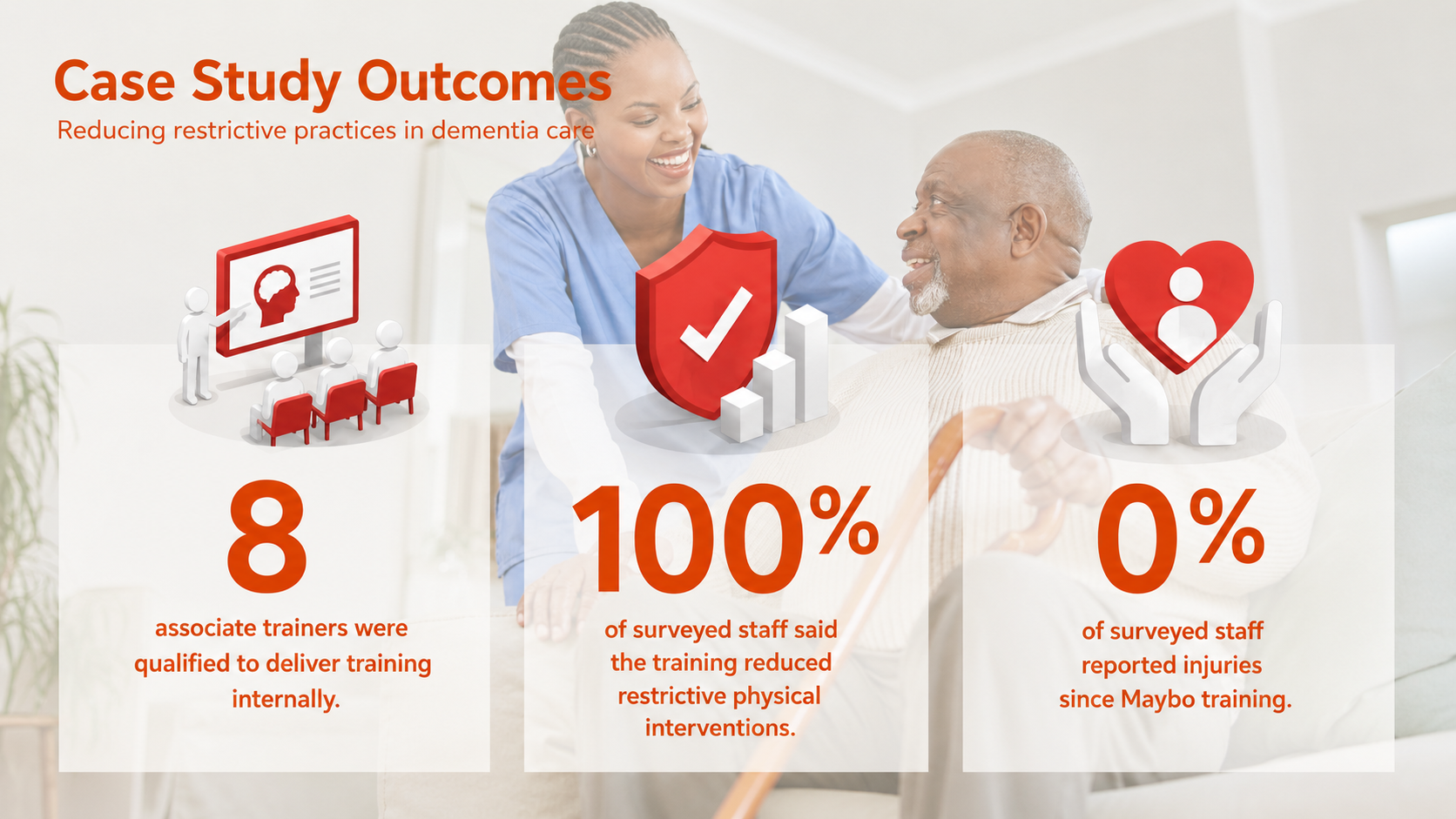
Eight associate trainers were qualified and began delivering training to colleagues in January 2024, helping the provider develop sustainable internal capability.
With a large number of services in scope, a single standard programme would not have
reflected the different levels of risk and support required.
Services supporting people living with dementia were therefore grouped into four categories. Each category had its own training needs analysis and programme, with bespoke solutions developed where individual services presented different requirements.
Training ranged from preventative approaches, communication, personal safety and guiding skills through to Bild ACT certified programmes that included restrictive physical interventions for higher-risk situations. Where restrictive interventions were included, they were positioned as a last resort within a wider positive and proactive approach.
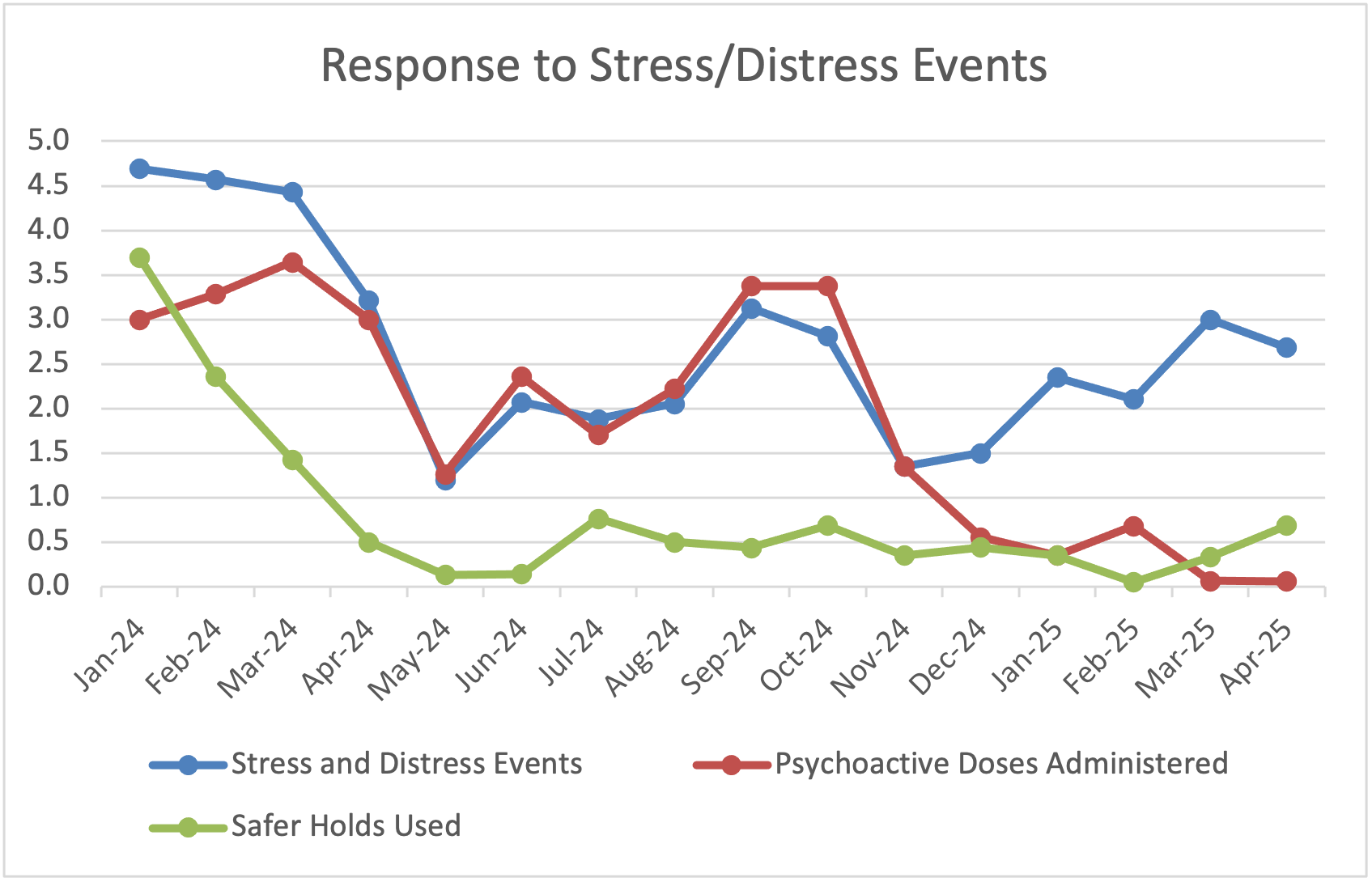
Data was examined from one service originally identified as being among the provider’s most challenging. Sixteen months of information, covering January 2024 to April 2025, showed a substantial reduction in the use of safer holds and psychoactive medication.
Some incidents involving stress and distress continued to occur, reflecting the complex needs and diagnoses of the people supported. However, staff were increasingly able to manage these situations through primary and secondary strategies rather than relying on restrictive responses.
The provider also reported that colleagues felt safer, police call-outs had reduced and the wellbeing of residents had improved.
Nine staff members from the highlighted service completed an evaluation of the training and its impact.
The findings included:
• 100% said the programme was relevant to their day-to-day duties
• 100% said the training had reduced restrictive physical interventions
• 100% reported a positive impact on the people they support
• 89% felt they received sufficient problem-solving support outside the training
• 0% reported being injured since receiving Maybo training, compared with 11% before training
Staff also reported confidence in communicating with people experiencing distress, de-escalating situations, maintaining their personal safety, guiding people to places of safety and supporting people during a crisis.
The case study demonstrates that training has the greatest impact when it is supported by effective risk assessment, positive behaviour support planning, organisational leadership and ongoing review.
By combining specialist support, programmes matched to service needs, internal trainer development and a structured annual review process, the provider has strengthened staff confidence and supported safer, less restrictive and more person-centred care.
The provider’s Learning and Development Manager described Maybo as a partner, reflecting the collaborative relationship established throughout the project.
If you would like to discuss how we can help you please get in touch with one of our experts today