Choose another country or region to
see content specific to your location

An NHS Foundation Trust’s journey with Maybo
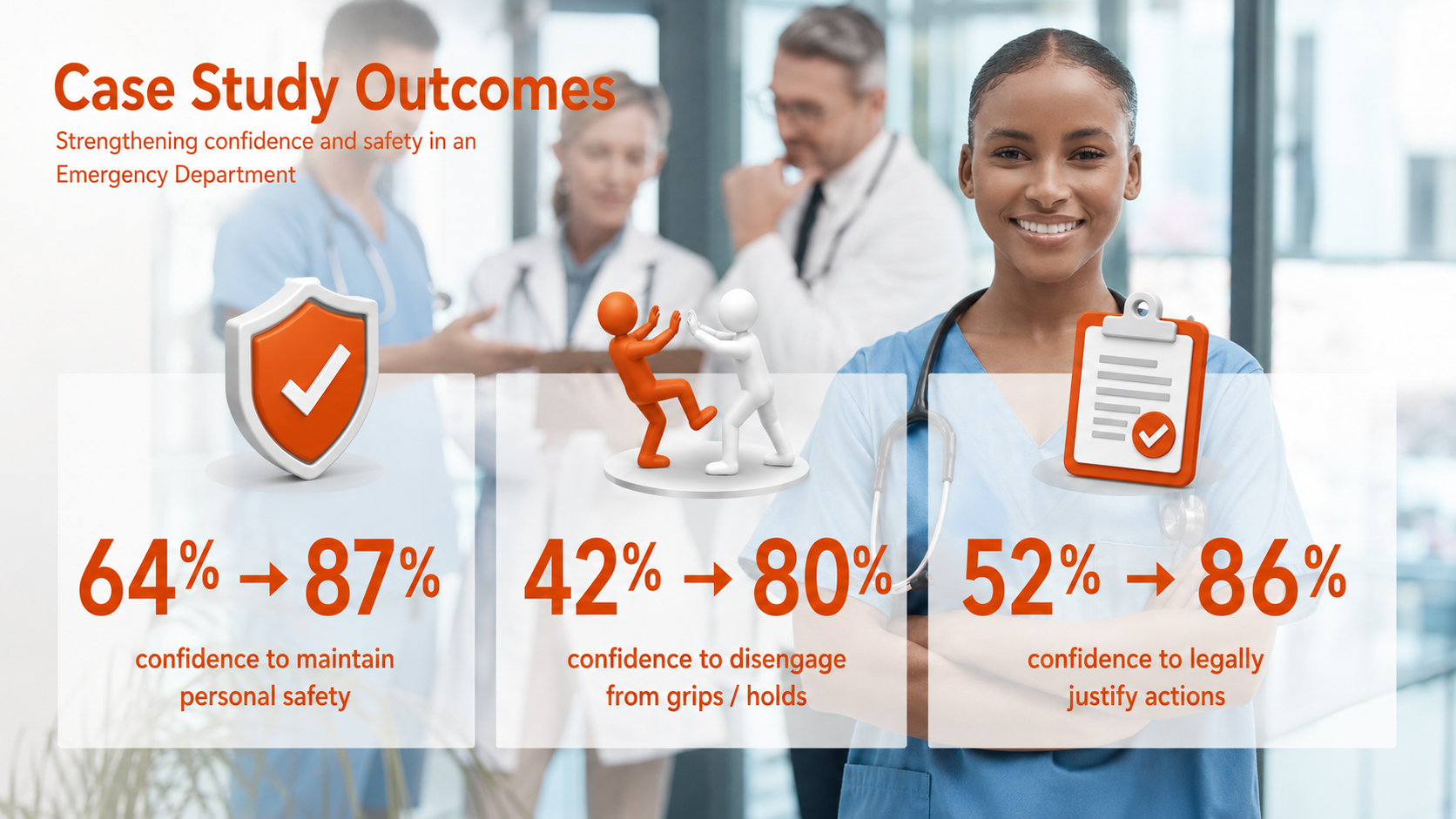
An NHS Foundation Trust approached Maybo to strengthen confidence and safety within its Emergency Department. Staff were supporting a highly diverse patient population, including people experiencing mental health crises, dementia, learning disabilities, autism, acquired brain injury, addiction, withdrawal and communication or sensory needs. These complex situations had to be managed alongside urgent assessment and treatment in a busy clinical environment.
Challenging encounters were frequent. Before the training, 80% of staff reported experiencing threats of violence at least monthly, 76% reported unintentional assault at least monthly, and more than half had experienced an intentional assault during the previous 12 months. Staff felt particularly vulnerable during triage, when supporting people in mental health crisis and when working alone.
The Trust wanted staff to recognise triggers and early warning signs, de-escalate situations more effectively and respond safely when verbal approaches alone were insufficient. It also wanted to reduce reliance on security, sedation and restrictive practices while helping staff feel confident that their decisions were safe, lawful and properly documented.
Maybo developed a tailored programme around the clinical, environmental and behavioural risks encountered within the Emergency Department.
The programme recognised that distress could be intensified by factors including pain, delirium, dementia, mental ill health, withdrawal, neurological injury, sensory overload, noise, bright lighting, crowding and long waiting times. It also reflected the reality that staff could not always step back from a situation when a patient required observation, treatment or support with an immediate clinical risk.
Training combined preventative, relational and physical safety content, helping staff select an appropriate response according to the individual, the level of risk and the clinical context. The programme included:
The programme was delivered using realistic Emergency Department scenarios, including mental health crises, impaired capacity, unpredictable assault, high-stimulation environments and situations in which staff had to balance the continuation of treatment with the safety of everyone involved.
Seventy-two staff completed training covering prevention, de-escalation, personal safety and redirection and guiding. Forty-eight of those staff also completed the Clinical Holding module, with the level of training matched to their role and potential exposure to risk.
This role-specific approach helped ensure that staff developed the skills relevant to their responsibilities rather than receiving a standard programme that did not reflect their working environment.
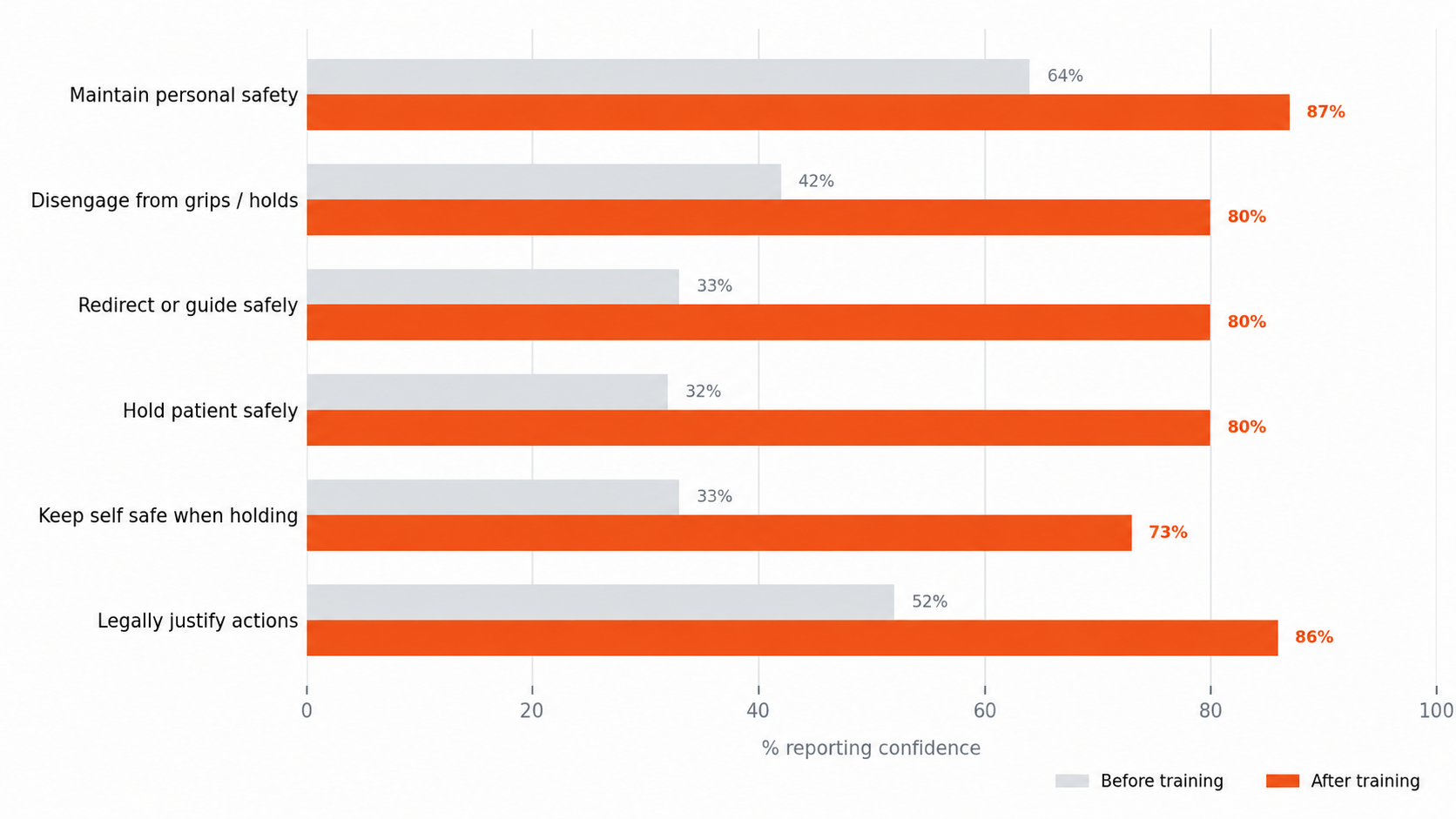
Post-training findings showed increased confidence across every area measured.
Confidence in maintaining personal safety increased from 64% before training to 87% after training. Confidence in disengaging from grips or holds increased from 42% to 80%, while confidence in redirecting or guiding an unpredictable patient increased from 33% to 80%.
Confidence in holding a patient safely increased from 32% to 80%, and confidence in keeping themselves safe while holding increased from 33% to 73%. Confidence in explaining and legally justifying actions rose from 52% to 86%.
The post-training survey also found that:
74% felt more confident caring for someone displaying escalated behaviours
Confidence in supporting people experiencing distress or a mental health crisis increased by 32%
67% said they were more likely to report incidents
Staff described the learning as practical, engaging, useful and relevant
The pre- and post-training percentages were taken from separate survey groups rather than matched responses from the same individuals. However, the findings indicate a clear positive difference in reported confidence following the programme.
Staff feedback demonstrated how the programme had influenced both confidence and day-to-day practice.
“The training was insightful. It showed us safer ways to support patients while being more mindful of the conditions and distress that may influence their behaviour.”
One staff member explained that they had already used the techniques with patients experiencing mental health crises, helping to keep both patients and colleagues safe. Others highlighted the value of active listening, thinking ahead and understanding why a patient may be presenting in a particular way.
The case study shows the value of training that reflects the realities of the clinical environment and equips staff with a range of proportionate responses.
Staff feedback identified periodic refresher activity as an important next step, particularly for physical skills that may not be used regularly. The Trust also identified a longer-term ambition to develop internal trainer capacity, helping it provide consistent education, practice and reinforcement.
By combining refresher training, local policy alignment, learning from incidents and ongoing programme review, the Trust can continue to keep prevention, proportionality and safety at the centre of Emergency Department practice.
If you would like to discuss how we can help you please get in touch with one of our experts today
Comments
[Disqus comments for content1132]