Communicating Safely using Maybo's Open PALMS™ Model

      • Maybo News
    • 15.04.24

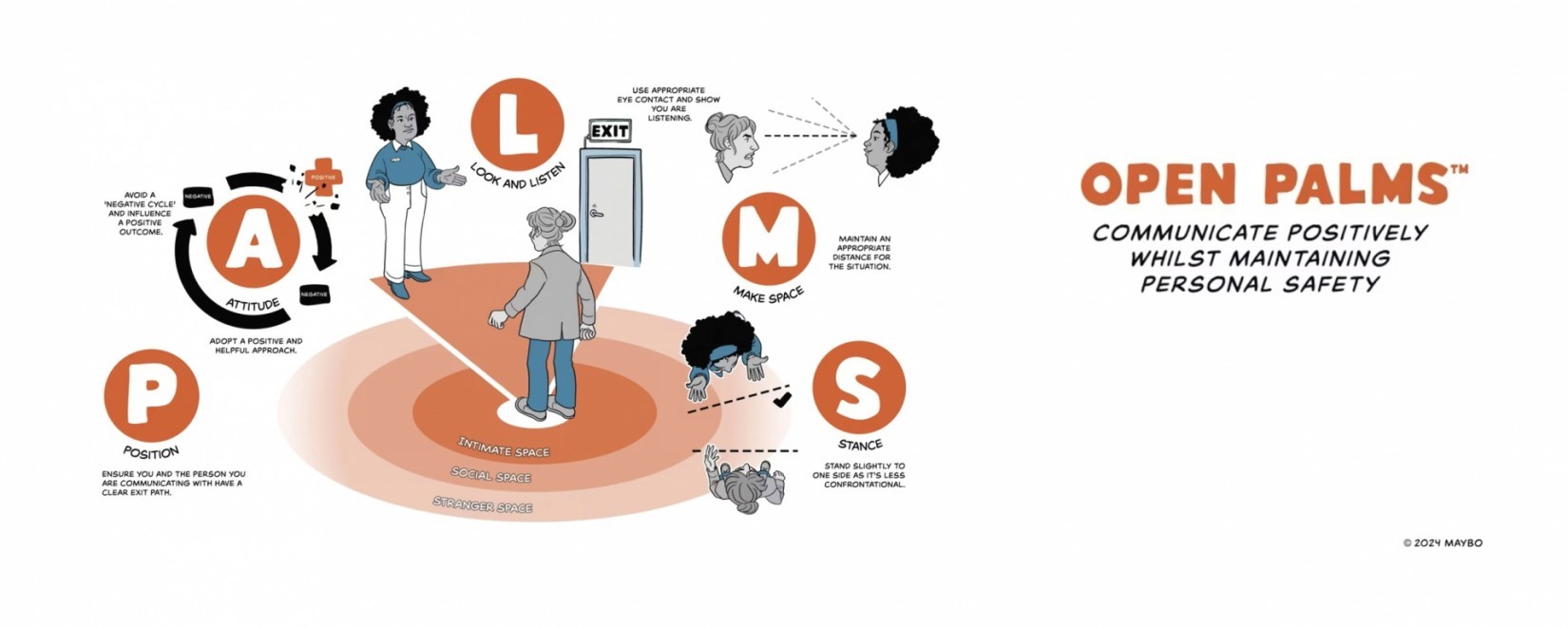
    Maybo’s Open PALMS™ Model helps us communicate positively while maintaining personal safety. Showing open hands with palms facing upwards is generally considered positive and non-threatening.

    This short video illustrates how the use of body language and positioning enable you to display non-aggression towards another person:


    Key Principles of the Open PALMS™ Model:

    • Position - think about your position in the environment. Ensure you and the person you are communicating with have a clear exit path
    • Attitude - adopt a positive and helpful approach
    • Look and Listen - use appropriate eye contact and show you are listening
    • Make Space - Maintain an appropriate distance for the situation (consider intimate space, social space and stranger space)
    • Stance - stand slightly to one side as it’s less confrontational

    To request a FREE poster of our SAFER, POPS, SEAL and Open PALMS models, suitable for staff rooms, training rooms, and notice boards, contact us with the link below

    Get in touch

    If you would like to discuss how we can help you please get in touch with one of our experts today

    Related ThoughtSpace items

    • Expert Insights

    14.07.26 | Healthcare

    Zero Normalisation, Not Zero Tolerance

    By Simon Whitehorn, Maybo Lead Consultant Violence, threats, racism, sexual harassment and abuse towards NHS staff must never be...

    • Expert Insights

    10.07.26

    Looking Behind Behaviour: Why Our Survival Brain Often Takes Control During Conflict

    When conflict occurs, it's tempting to ask: "Why did they behave like that?" Perhaps a more helpful question is: "What was happening...

    • Expert Insights

    09.04.26 | Security, FM & Events | Healthcare

    From Crisis to Care: Rethinking Safety for People in Mental Health Crisis in Urgent and Emergency Settings

    Across urgent and emergency care, services are increasingly supporting people at moments of acute mental health crisis. These are often...

    Discuss your training with one of our experts