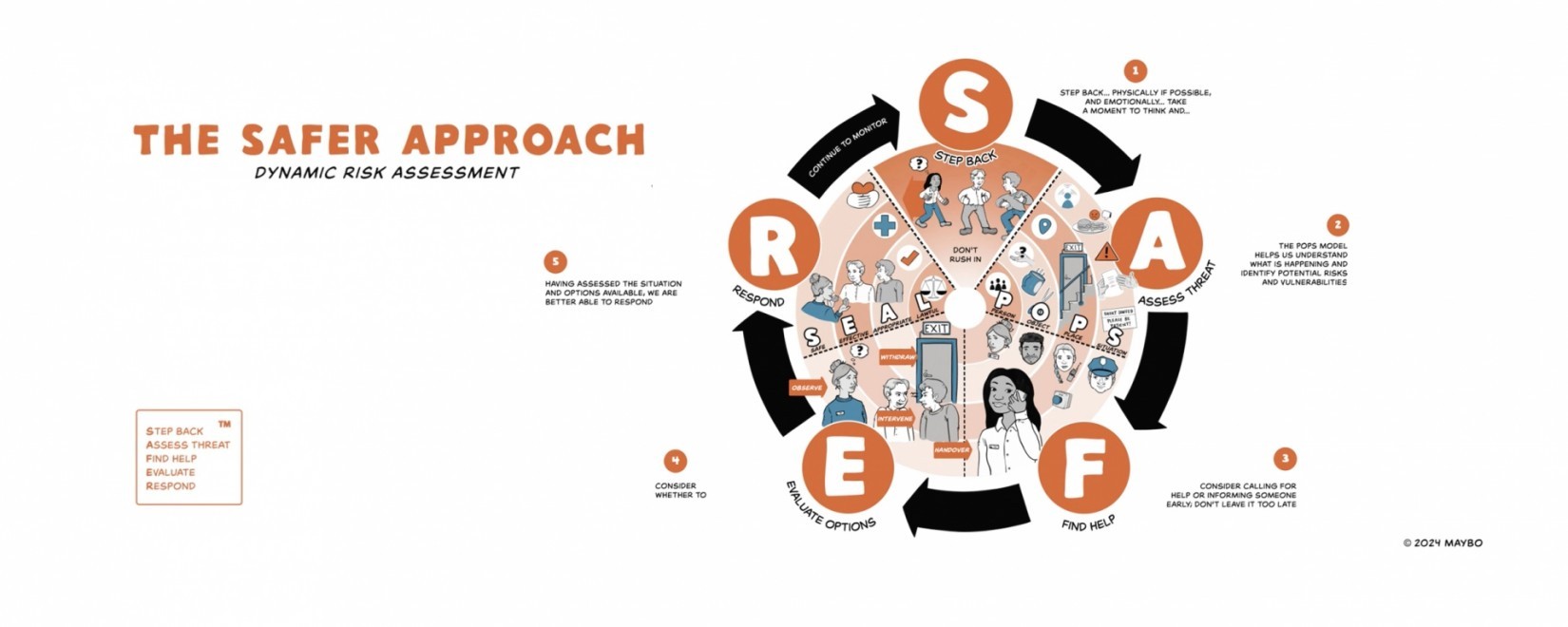
Explaining Maybo's SAFER Approach

      • Maybo News
    • 15.04.24

    Maybo’s SAFER Approach equips individuals and organisations with the knowledge and skills to manage challenging situations in a way that reduces risk and leads to positive and safer outcomes.

    This short video introduces the principles of the SAFER Approach and outlines how following these steps can help us to respond safely and effectively when a situation occurs:


    Key Principles of Maybo’s SAFER Approach:

    • Step Back - physically if possible, but also emotionally
    • Assess Threat - assess using Maybo’s POPS model
    • Find Help - consider calling for or finding help early on
    • Evaluate Options - consider whether to intervene, stand back and observe, hand over to others or withdraw to somewhere safe
    • Respond - use Maybo’s SEAL Test to guide you in your response

    Continue to monitor the situation until you are certain there is no longer any risk.

    To request a FREE poster of our SAFER, POPS, SEAL and Open PALMS models, suitable for staff rooms, training rooms, and notice boards, contact us with the link below

    Get in touch

    If you would like to discuss how we can help you please get in touch with one of our experts today

    Related ThoughtSpace items

    • Expert Insights

    14.07.26 | Healthcare

    Zero Normalisation, Not Zero Tolerance

    By Simon Whitehorn, Maybo Lead Consultant Violence, threats, racism, sexual harassment and abuse towards NHS staff must never be...

    • Expert Insights

    10.07.26

    Looking Behind Behaviour: Why Our Survival Brain Often Takes Control During Conflict

    When conflict occurs, it's tempting to ask: "Why did they behave like that?" Perhaps a more helpful question is: "What was happening...

    • Expert Insights

    09.04.26 | Security, FM & Events | Healthcare

    From Crisis to Care: Rethinking Safety for People in Mental Health Crisis in Urgent and Emergency Settings

    Across urgent and emergency care, services are increasingly supporting people at moments of acute mental health crisis. These are often...

    Discuss your training with one of our experts