Choose another country or region to
see content specific to your location
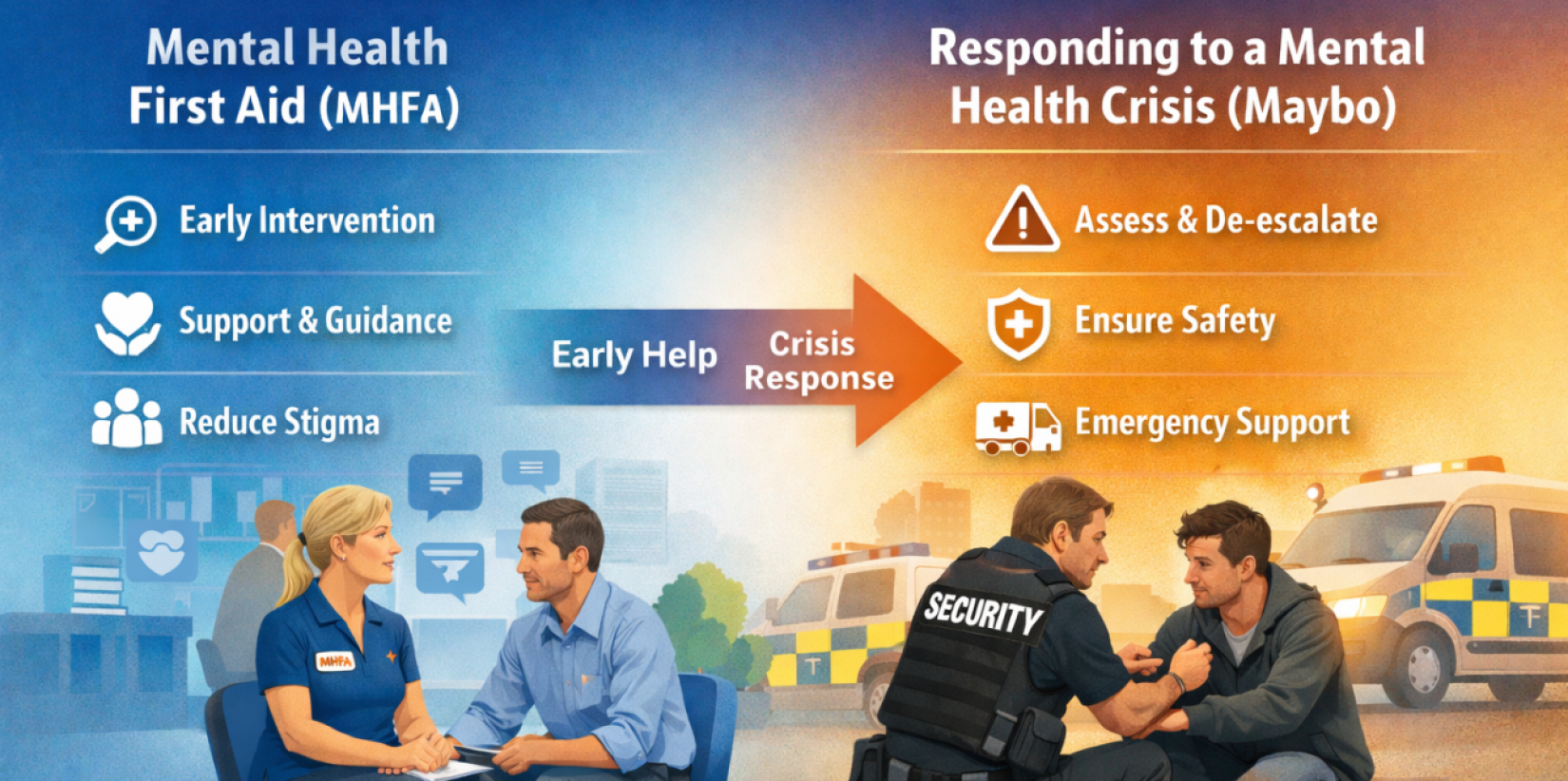
Increasingly organisations acknowledge that their teams may at times benefit from everyday mental health support. Many UK based organisations address this via the Mental Health First Aid (MHFA) programme and train staff as Mental health First Aiders. What about where non clinical staff interact with individuals who are not employees, but who may be experiencing a Mental Health Crisis?
I’ve been asked recently by a client how Maybo 's Responding to a Person Experiencing a Mental Health Crisis module differs from Mental Health First Aid (MHFA) training.
The Maybo Crisis module is tactical, risk-focused, and time-limited. It supports responders to assess immediate danger, de-escalate situations under pressure, help to secure safety, and be ready to hand over to clinical or emergency services. The training is scenario-based and designed to provide participants with an insight into mental health crisis and suicide risks, some practical considerations as well as addressing common misconceptions and concerns about intervening where someone may be experiencing an episode of acute mental ill-health.
MHFA is preventative, awareness-led, and relational. It trains a broader workforce to recognise early signs of common mental health problems, hold a structured supportive conversation, reduce stigma, and guide colleagues to appropriate help. MHFA is usually classroom or blended learning, and it builds sustained capability across the organisation rather than instantaneous response skills.
Put simply: Maybo’s Mental Health Crisis training can help keep people safer in the moment; MHFA helps spot problems early, provide short-term support, and connect people to longer-term care. For high-risk settings, organisations could provide MHFA to the wider workforce, and Maybo’s Mental Health Crisis training for nominated frontline responders, so prevention and emergency response work together to help keep everyone safer.
If you have staff who interact with people who might be experiencing an episode of mental ill health we might be able to support them with training to help.
If you would like to discuss how we can help you please get in touch with one of our experts today