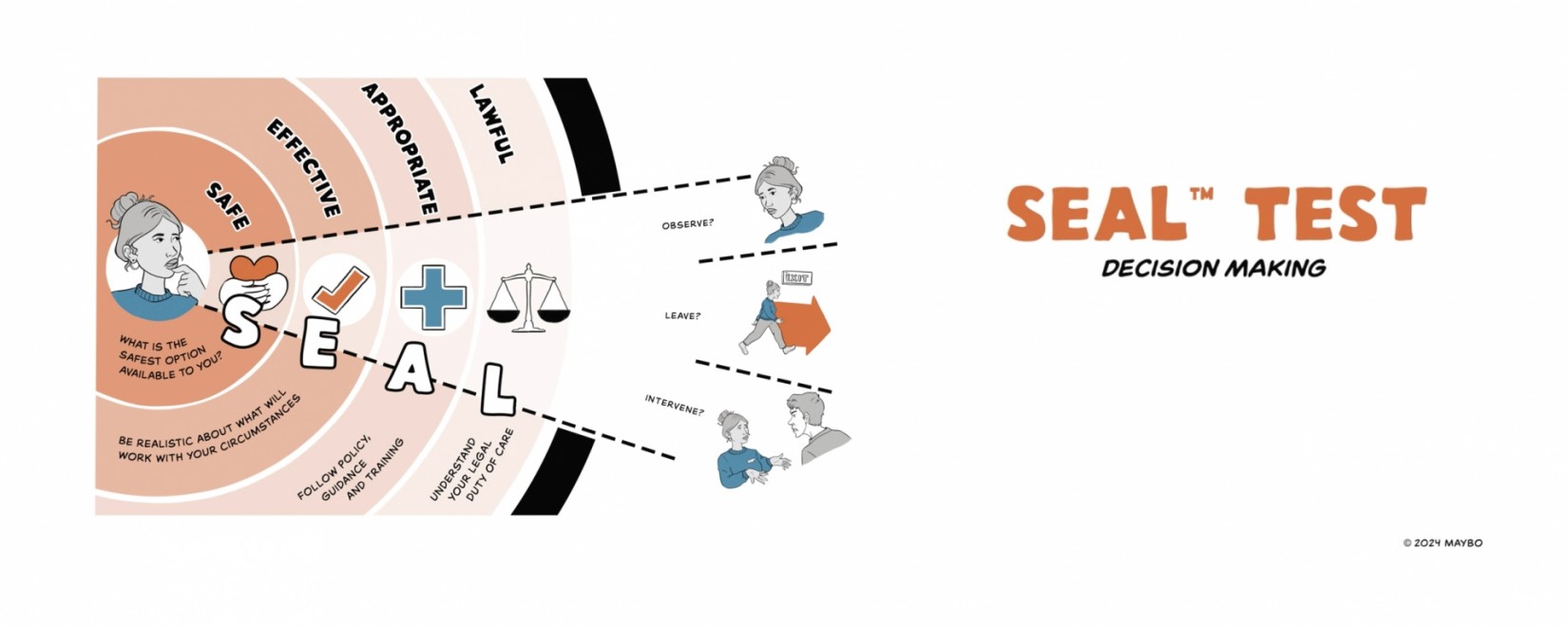
Responding to a situation with Maybo's SEAL™ Test

      • Maybo News
    • 03.04.24

    Maybo’s SEAL™ Test informs decision making when responding to a situation, by considering whether your response is Safe, Effective, Appropriate and Lawful. 

    Using Maybo’s SEAL™ Test will ensure any actions you take are reasonable, necessary and proportionate.

    This short video explains how to consider your response using SEAL™ as part of Maybo’s SAFER Approach to conducting a dynamic risk assessment:


    Key Elements of Maybo’s SEAL™ Test:

    1. Safe - consider the safest option for you and others
    2. Effective - what will work in the circumstances, consider your abilities and the support available
    3. Appropriate - consider the best interests of those involved and follow policies, guidance and training
    4. Lawful - understand the authority you have and your duty of care to yourself and others

    Even when the options available are limited, using the SEAL™ Test will help guide and justify your decisions.


    To purchase posters of our SAFER, POPS, SEAL™ and Open PALMS™ models, suitable for staff rooms, training rooms and notice boards visit our store.

    Get in touch

    If you would like to discuss how we can help you please get in touch with one of our experts today

    Related ThoughtSpace items

    • Expert Insights

    24.09.26 | Social Care | Healthcare, …

    5 Practical Safety Tips for Lone Workers Visiting People in the Community

    Many professionals regularly travel into the community to meet people as part of their work. Community healthcare staff, social care...

    • Sector News

    15.09.26 | Passenger Transport

    When Is It Safe to Intervene?

    New legal requirements are changing how bus operators need to prepare drivers and other passenger-facing staff to recognise and respond...

    • Expert Insights

    07.09.26 | Social Care | Healthcare

    Supporting the People Who Support People Living with Dementia

    Burnout has been on the agenda in health and social care for years. But are we doing enough to support the people whose job it is to care...

    Discuss your training with one of our experts